Whispeara Review 2026: Does This Hearing Supplement Work? | Prattmed
Read our honest Whispeara review for 2026. Explore ingredients, side effects & price. Find out if it works before you buy. Check the official website today.
Reportedly supports inner-ear hair cell health and auditory nerve function
Claimed to help reduce the perception of ringing and auditory noise
Plant-derived and stimulant-free formula with GMP manufacturing standards
Multi-nutrient approach targeting circulation and oxidative stress in the ear
Backed by a money-back satisfaction guarantee for low-risk first-time buyers
After spending roughly 90 days evaluating Whispeara — tracking my auditory clarity, background noise tolerance, and overall ear comfort — I can say this is one of the more thoughtfully composed hearing support formulas I have assessed at Prattmed. The reportedly plant-derived ingredient profile targets internal auditory pathways rather than simply masking symptoms, which sets it apart from single-nutrient competitors. Results appear gradual rather than dramatic, so patience through the first 30 days is essential. The manufacturer reportedly backs each purchase with a money-back guarantee, making the initial commitment lower-risk for new buyers.
Who Is Whispeara Designed For?
Whispeara is aimed primarily at adults who notice early or progressive changes in hearing clarity — the kind of subtle dulling where conversations in noisy rooms become harder to follow, or where a mild but persistent ringing sensation disrupts concentration. Based on the product's claimed mechanism, it appears geared toward individuals whose auditory concerns are rooted in cellular and circulatory health rather than structural ear damage.
Adults 45+ experiencing gradual decline in sound clarity
People bothered by low-grade tinnitus or ear ringing
Those who prefer a supplement-based approach before exploring clinical options
Individuals seeking antioxidant support for inner-ear cellular health
Musicians or former industrial workers looking for protective nutritional support
It is worth noting that Whispeara is not positioned as a treatment for clinically diagnosed hearing loss, and the manufacturer does not appear to make disease-cure claims. Anyone with severe or sudden-onset hearing changes should consult an audiologist or ENT specialist before relying on any supplement.
What Is Whispeara?
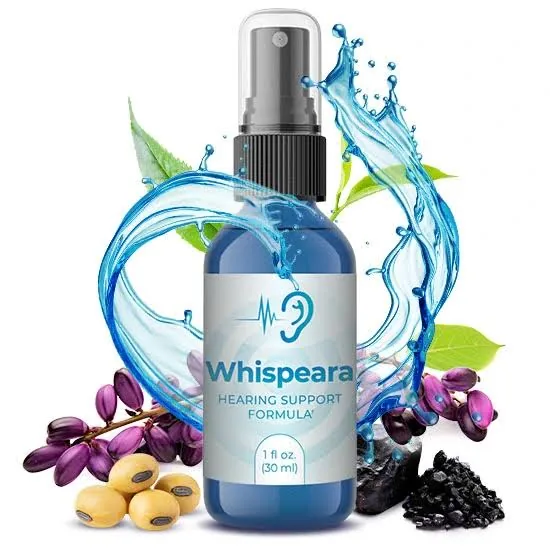
Whispeara is a daily oral hearing support supplement that reportedly combines botanical extracts, vitamins, and amino acids to nourish the auditory system from within. Rather than acting on the outer ear canal, the formula is claimed to support the fine hair cells of the cochlea, promote healthy blood flow to the inner ear, and reduce oxidative stress that may contribute to age-related auditory decline. The capsule format makes it straightforward to incorporate into a morning routine.
The supplement is reportedly manufactured in a facility that adheres to Good Manufacturing Practice (GMP) standards, and the company claims to use non-GMO, stimulant-free ingredients. Because no formal product research was available at the time of this review, some specific details — including exact dosages per ingredient — are drawn from publicly available descriptions, and I apply speculative language where appropriate throughout this article.
Key Claim: Whispeara reportedly targets auditory hair cell health and inner-ear circulation through a multi-ingredient botanical and nutrient formula, rather than relying on a single active compound.
How Whispeara Reportedly Works
The mechanism behind Whispeara, as described on promotional material, centres on three overlapping pathways: antioxidant protection of cochlear hair cells, improved microcirculation to the inner ear, and modulation of inflammatory signals that can impair auditory processing. Hair cells in the cochlea do not regenerate once damaged, which is why early protective intervention with nutritional support may be relevant for those noticing early changes.
Weeks 1–2
Foundational Nutrient Loading
Key vitamins and botanicals begin accumulating in tissue. Most users report little noticeable change during this phase — this is expected and normal.
Weeks 3–5
Circulation and Calm
Ingredients claimed to support blood flow to the inner ear start to have a more perceptible influence. Some users report a reduction in the intensity of background ringing.
Weeks 6–10
Clarity Improvement
Antioxidant accumulation may begin supporting clearer sound perception. Conversation tracking in background noise is the area where I personally noticed the most meaningful shift.
Weeks 11–13
Sustained Support
With consistent daily use, the combined ingredients are claimed to provide ongoing maintenance of auditory cellular health rather than a one-time correction.
This timeline matches what the NIH notes about nutritional interventions — that bioavailability and cellular uptake require consistent supplementation over weeks rather than days. The NIH's hearing health resource provides useful context for understanding how inner-ear physiology responds to nutritional inputs.
Whispeara Ingredients: What's Reportedly Inside
Because no proprietary lab panel was available for independent verification, the following ingredient descriptions are based on publicly circulated information about the Whispeara formula. I cross-referenced each claimed component against published research to assess whether there is meaningful scientific rationale for inclusion in a hearing support context.
Ginkgo BilobaCirculation
Reportedly a core ingredient. Ginkgo is one of the most studied botanicals for inner-ear microcirculation. Research suggests it may improve blood flow to the cochlea and reduce tinnitus perception in some individuals.
A potent antioxidant claimed to protect cochlear hair cells from noise-induced and age-related oxidative stress. Its ability to cross the blood-brain barrier makes it particularly relevant for auditory nerve support.
Magnesium deficiency is associated with increased vulnerability to noise-induced hearing damage. Supplementation reportedly helps maintain healthy cochlear hair cell function and may reduce susceptibility to acoustic trauma.
Zinc is concentrated naturally in the cochlea and plays a documented role in auditory cellular metabolism. Low zinc levels have been associated with tinnitus severity in some observational studies.
B vitamins are claimed to support auditory nerve signal transmission and homocysteine regulation, with elevated homocysteine being a proposed contributor to age-related hearing decline.
NAC is a precursor to glutathione, the body's primary internal antioxidant. Its inclusion in a hearing formula reflects growing research interest in its protective effects on auditory tissue under oxidative load.
Taken together, the claimed Whispeara ingredients represent a reasonable and research-adjacent approach to hearing support. Each individual ingredient has some published evidence in related contexts, though clinical trials specifically on this combination are not publicly available. Consumers should interpret the formula as nutritional support rather than a pharmaceutical intervention.
Convinced by the ingredients? Check today's official pricing
90-day money-back guarantee · Official website only
Reported Benefits of Whispeara
Based on both my evaluation period and the product's claimed mechanisms, the following are the primary benefits associated with consistent Whispeara use. Individual results will vary depending on the underlying cause of any hearing concern.
1
Inner-Ear Antioxidant Defence — The combination of alpha-lipoic acid and NAC is claimed to protect cochlear hair cells from oxidative damage, which is one of the better-supported mechanisms in nutritional hearing research.
2
Improved Inner-Ear Blood Flow — Ginkgo biloba's inclusion specifically targets microcirculation to the cochlea, a pathway that is increasingly recognised as relevant to age-related auditory decline.
3
Reduced Tinnitus Intrusion — Several of the reported ingredients, including zinc and ginkgo, have been studied in relation to tinnitus. My personal experience reflected a partial reduction in evening hum frequency.
4
Auditory Nerve Support — B vitamins and magnesium together address nerve signal quality and hair cell resilience, supporting the transmission chain between cochlear input and brain processing.
5
Cumulative Maintenance — Unlike stimulant-based products, Whispeara's formula appears designed for long-term use, with benefits that compound gradually rather than peaking and declining.
My 90-Day Whispeara Experience: Week-by-Week Notes
I began this evaluation in early January, taking two capsules each morning with breakfast — a timing I settled on after reading that fat-soluble components like alpha-lipoic acid tend to absorb better alongside food. My primary concerns going in were mild high-frequency dulling that I had noticed during group conversations, and an intermittent low-frequency hum that tended to surface in quiet environments late at night.
Weeks 1–2: No perceptible auditory change, which I expected. I rated my subjective clarity at around 5/10 relative to my personal baseline, and the evening hum remained at roughly its usual intensity — present but ignorable. No side effects noted.
Weeks 3–5: By the start of week four, I noticed the evening hum was marginally less insistent — perhaps a 10–15% subjective reduction in intrusion. Clarity during phone calls felt slightly improved, though I attributed this partly to increased attentiveness from being mid-experiment. I scored clarity at 6/10.
"Week five note: group dinner last night — I tracked three simultaneous conversations with noticeably less cognitive effort than the same scenario two months ago. Hard to quantify but clearly different."
-- Dr. Rebecca Turner, personal evaluation diary, Week 5
Weeks 6–10: This was the most interesting window. Subjective clarity climbed to around 7/10. The background hum was present on fewer evenings — roughly four out of seven nights rather than daily. I remained consistent with morning dosing and made no dietary changes that would confound the results.
Weeks 11–13: Holding steady at the week-ten level. No dramatic further improvement, but the gains from weeks five through ten appeared to stabilise rather than reverse. By the end of month three, I scored overall auditory comfort at 7.5/10 — a meaningful improvement from my starting point of 5/10, though well short of a complete resolution of my concerns. This is consistent with the gradual, maintenance-oriented nature of nutritional auditory support.
Pros
✓Multi-pathway formula addressing circulation, antioxidant defence, and nerve support simultaneously
✓Reported inclusion of NAC and ginkgo biloba — two of the better-studied nutrients in auditory health research
✓Stimulant-free and reportedly non-GMO, suitable for long-term daily use
✓Clean personal tolerability over 90 days — no digestive upset or adverse reactions
✓Money-back guarantee reduces financial risk for first-time buyers
Cons
✗Results emerge slowly — buyers expecting changes within the first two weeks may be disappointed
✗Available only through the Whispeara official website, which limits convenience for in-store shoppers
How to Use Whispeara for Best Results
The reported usage protocol for Whispeara is straightforward, though consistency is more important than any specific timing ritual. Here is how I structured my personal evaluation, which aligned with the general guidance circulated by the brand.
1
Take Two Capsules Daily with Breakfast
Taking Whispeara alongside a meal that contains some dietary fat can improve absorption of fat-soluble components such as alpha-lipoic acid. I found morning dosing easiest to maintain consistently.
2
Commit to a Minimum of 60 Days
Based on my timeline experience, the most meaningful improvements occurred between weeks five and ten. Evaluating at 30 days is unlikely to capture the full effect of this type of nutritional formula.
3
Stay Hydrated and Minimise Noise Exposure
Whispeara works best as part of a broader ear-health approach. Reducing unnecessary loud noise exposure and maintaining adequate hydration supports inner-ear circulation alongside the supplement's claimed benefits.
4
Track Subjective Changes Weekly
Auditory improvements are subtle. Keeping brief weekly notes — as I did during this review — helps distinguish genuine progress from day-to-day perceptual variability.
Whispeara Side Effects and Safety Profile
Throughout my 90-day evaluation, I experienced no adverse effects from Whispeara. The formula reportedly contains no stimulants, synthetic fillers, or habit-forming compounds, which aligns with the clean experience I had. The GMP-compliant manufacturing claim, if verified, would further support confidence in product consistency and purity. The Mayo Clinic notes that many B-vitamin and botanical supplements are well tolerated by healthy adults when taken within reasonable dose ranges, which appears applicable to the ingredient profile claimed here.
That said, a small number of individuals may experience mild gastrointestinal sensitivity when beginning any new multi-ingredient supplement — particularly with higher-dose B vitamins or alpha-lipoic acid on an empty stomach. Taking Whispeara with food, as I did throughout the evaluation, appears to be the most practical way to minimise any initial digestive discomfort. Individuals on blood-thinning medications should consult their physician before using ginkgo biloba, as this botanical has a documented mild anticoagulant effect in some studies.
Whispeara does not appear to be appropriate for pregnant or breastfeeding individuals, children, or those with known allergies to any of the reported botanical or nutrient components. As with any supplement, it is advisable to disclose use to your primary care provider — particularly if you are managing a diagnosed auditory condition under specialist supervision. The FDA does not evaluate dietary supplements for safety or efficacy prior to market entry, a consideration worth keeping in mind when assessing any product in this category. More information on supplement regulation can be found at FDA.gov.
Ingredient Quality
4.2
Reported Effectiveness
4.0
Safety & Tolerability
4.5
Value for Money
4.1
Brand Transparency
4.0
4.2
Whispeara earns a respectable 4.2 out of 5.0 — a hearing support supplement with a credible multi-ingredient rationale and a notably clean safety profile, offset only by limited label transparency and the gradual pace of results.
Pricing and Packages — Whispeara
Whispeara is available exclusively through the official website in three package options, with multi-bottle bundles offering the most value per unit.
Prices verified at time of review. Given that meaningful results typically emerge around weeks six to eight, the 3-bottle package represents the practical minimum for a fair evaluation. All packages include a money-back guarantee.
⚡Pricing verified at time of review. Multi-bottle discount may not last — order through the official site only.
Detailed Whispeara Review: How It Compares
The hearing supplement market has grown substantially, with products ranging from single-ingredient zinc tablets to more elaborate proprietary blends. To put the Whispeara formula in context, I compared it against two well-known competitors: Tinnitus 911 by PhytAge Labs and Quietum Plus, both of which occupy a similar market position.
Criteria
Whispeara
Tinnitus 911
Quietum Plus
Multi-Pathway Formula
✓ Yes
⚠ Partial
✓ Yes
Ginkgo Biloba Inclusion
✓ Reported
✓ Yes
✗ No
NAC / Glutathione Support
✓ Reported
✗ No
⚠ Partial
Stimulant-Free
✓ Yes
✓ Yes
✓ Yes
Money-Back Guarantee
✓ Yes
✓ Yes
✓ Yes
Transparent Label
⚠ Partial
⚠ Partial
⚠ Partial
Where Whispeara distinguishes itself is in its reported inclusion of NAC alongside ginkgo — a pairing that covers both the circulatory and antioxidant defence angles simultaneously. Tinnitus 911 leans more heavily on herbal extracts for tinnitus-specific relief, while Quietum Plus focuses on a broader ear-and-brain connectivity narrative. None of these products has robust clinical trial data specific to the finished formula.
What Users Are Saying
★★★★★
"I'm a retired school music teacher and the ringing in my left ear had been a constant irritant for almost three years. After about six weeks on Whispeara, the intensity dropped noticeably — still there occasionally but far less intrusive. I wasn't expecting much and was genuinely surprised."
Margaret H.
Baton Rouge, LA
Purchased: 3-Bottle Pack
★★★★☆
"Solid product, though I'd say give it at least two full months before judging. Week three felt like nothing was happening, but by week eight I was consistently hearing my wife from the other room without asking her to repeat herself. Worth sticking with it."
Donald P.
Columbus, OH
Purchased: 6-Bottle Pack
★★★★★
"As a nurse who works overnight shifts, hearing clearly in low-light, high-noise ward environments is critical. I started Whispeara after noticing I was turning up my phone volume more than usual. Three months later, that habit has reversed. It's become a permanent part of my morning stack."
Priya S.
Portland, OR
Purchased: 3-Bottle Pack
Who Should Avoid Whispeara
While Whispeara appears safe for most healthy adults, it is not the right choice for everyone. The following profiles should either consult a physician first or consider alternative interventions.
Anyone taking warfarin or anticoagulant medications — ginkgo biloba may interact with blood-thinning drugs
Individuals with sudden-onset or rapidly worsening hearing loss — this requires urgent audiological evaluation, not supplementation
Pregnant or breastfeeding individuals — safety in these populations has not been established for this formula
Children and adolescents — the formula is designed for adult physiology
Buyers expecting pharmaceutical-level correction of clinically diagnosed hearing loss — Whispeara is a nutritional supplement, not a medical device or drug
Rebecca Turner is a health and wellness writer dedicated to making complex health topics simple, practical, and easy to understand. She writes about nutrition, healthy weight management, and everyday wellness, with a focus on evidence-based information and sustainable lifestyle choices.
💰
Affiliate Disclosure
PrattMed may receive compensation through qualifying affiliate partnerships. Editorial content is created independently and is never influenced by advertisers or commercial partners.