

It rarely feels gradual when it's happening to you. One season your part looks the way it's always looked, and the next you're noticing more scalp showing through, more strands on the pillow, and a ponytail that suddenly feels thinner in your hand. For many women, that timeline lines up almost exactly with perimenopause or the first year or two after their final period — and that's not a coincidence. There's a specific hormonal mechanism behind it, and understanding it changes what you do about it.
It's Not Really About Losing Estrogen — It's About the Ratio
Most explanations stop at "estrogen drops during menopause," which is true but incomplete. The more precise picture is about balance. Estrogen has historically helped keep hair in its growth phase longer and has a mild suppressive effect on androgens, the hormone family that includes testosterone and its more potent derivative, DHT. As estrogen production falls sharply during menopause, androgens don't necessarily increase in absolute terms — but because the estrogen that was previously counterbalancing them is gone, their relative influence on hair follicles increases substantially. This shift in ratio, rather than a dramatic hormonal spike, is what tips many hair follicles on the scalp into a more androgen-sensitive state than they were the decade before.
Why This Hits the Scalp But Not Body Hair
One detail that puzzles a lot of women is why this hormonal shift seems to thin scalp hair while sometimes coarsening hair elsewhere on the face or body. The explanation lies in how differently hair follicles in different locations respond to the same hormone. Scalp follicles, particularly along the crown and part line, tend to be genetically primed to shrink in response to androgen influence — a process called miniaturization, where each new hair grows back finer and more weakly rooted than the one before. Follicles on the chin or upper lip, by contrast, often respond to the same androgen exposure by growing more robustly. It's the same hormonal shift producing opposite effects depending entirely on the follicle's individual sensitivity, which is itself largely inherited.
Female Pattern Hair Loss Has a Name and a Pattern
What's happening during this process has a clinical name: androgenetic alopecia, more commonly called female pattern hair loss when discussing women specifically. It typically shows up as diffuse thinning concentrated at the crown and a widening part line, rather than the receding hairline pattern more associated with men. Importantly, this is a different process from telogen effluvium, a temporary, more dramatic shedding event that can also occur around menopause due to the sheer stress of hormonal upheaval itself. Many women actually experience both simultaneously during the menopausal transition — a temporary stress-related shed layered on top of the slower, hormonally-driven miniaturization — which is part of why the hair loss can feel so sudden and severe even though one of the two processes is fundamentally gradual.
How to Tell Which Process Is Driving Your Hair Loss
Distinguishing telogen effluvium from androgenetic alopecia matters because the outlook and treatment differ:
- Timing — telogen effluvium often follows a specific trigger by two to three months (a major illness, surgery, significant weight loss, or the hormonal swings of perimenopause itself), while androgenetic alopecia builds slowly without an obvious starting point.
- Pattern — telogen effluvium is typically diffuse across the entire scalp, while androgenetic alopecia concentrates at the crown and along the part.
- Hair shaft thickness — in androgenetic alopecia, new hairs growing in are visibly finer than older ones; in telogen effluvium, the hairs that do grow back are normal thickness, just delayed.
- Duration — telogen effluvium usually resolves within six to nine months once the trigger passes, while androgenetic alopecia is progressive without intervention.
A dermatologist can usually distinguish the two through a combination of scalp examination, a pull test, and sometimes a trichoscopy, which magnifies the scalp to assess hair shaft diameter directly.
What Bloodwork Can Reveal
Because several other conditions can mimic or worsen menopausal hair thinning, doctors often order a small panel of blood tests alongside a physical exam. Thyroid function tests matter because both an underactive and overactive thyroid can cause hair shedding that's easy to mistake for hormone-driven thinning. Ferritin, a measure of iron storage, is checked because low iron — common in women with a history of heavy periods leading up to menopause — independently contributes to hair loss and is very treatable once identified. Vitamin D levels are sometimes checked too, since deficiency has been associated with hair shedding in several studies. None of these will be the whole story for most women going through menopause, but ruling them out, or treating them if found, often produces noticeable improvement on its own.
Treatment Options That Actually Have Evidence Behind Them
A genuinely overwhelming number of products claim to regrow hair, but the options with real clinical support are a shorter list:
- Topical minoxidil is the most studied over-the-counter option and works by extending the growth phase of existing follicles; consistent daily use for at least four to six months is needed before judging effectiveness.
- Oral or topical anti-androgens, such as spironolactone, are sometimes prescribed off-label by dermatologists to reduce androgen influence on follicles, though they require a doctor's evaluation given potential side effects and interactions.
- Hormone replacement therapy, if appropriate for a woman's broader menopausal symptom picture, can sometimes improve hair density as a secondary benefit, though it's not typically prescribed for hair loss alone.
- Low-level laser therapy devices, available as combs or caps, have modest but real evidence supporting their use as an adjunct to other treatments.
- Platelet-rich plasma injections, performed by a dermatologist, use a concentration of a patient's own blood components to stimulate follicles and have shown promising results in several controlled studies.
If you're also dealing with other menopause-related changes, our article on managing common menopause symptoms covers several overlapping concerns that often arise around the same timeframe.
Daily Habits That Support Whatever Treatment You Choose
No daily habit will reverse a strong genetic predisposition on its own, but several genuinely support healthier hair retention alongside medical treatment. Gentle handling — avoiding tight hairstyles that pull on already-weakened follicles, and minimizing high-heat styling — reduces additional mechanical stress on hair that's already more fragile than it used to be. Adequate protein intake matters since hair is structurally built from protein, and women who've inadvertently reduced their intake during midlife dietary changes sometimes see improvement just from correcting that. Managing stress, while easier said than done, also genuinely helps, since elevated cortisol can independently worsen hair shedding on top of the hormonal shift already at play.
When to See a Dermatologist Rather Than Wait It Out
A few signs suggest it's worth getting a professional opinion sooner rather than later:
- Hair loss in distinct patches rather than diffuse thinning
- Visible scalp redness, scaling, or itching alongside the hair loss
- Hair loss accompanied by other new symptoms like significant fatigue, weight change, or irregular heartbeat
- No improvement after six months of consistent treatment with an over-the-counter option
- Hair loss that's progressing rapidly rather than gradually
The Role of Genetics in How Strongly You're Affected
Not every woman going through menopause experiences noticeable hair thinning, and genetics is a large part of why. The sensitivity of scalp hair follicles to androgens is substantially inherited, which is why women with a strong family history of female pattern hair loss — particularly on the maternal side, though paternal family history matters too — tend to notice more pronounced thinning at the same hormonal stage than women without that family pattern. This genetic component also explains why two sisters going through menopause around the same age, eating similarly and managing stress similarly, can end up with very different degrees of visible hair change. Knowing your family history doesn't change the underlying biology, but it can be useful information to bring to a dermatologist, since a strong family pattern sometimes shifts the recommended starting point toward earlier or more proactive treatment.
How Hair Loss Differs From Perimenopause Through Postmenopause
The experience of hair changes isn't static across the menopausal transition — it tends to shift in character at different stages. During perimenopause, when hormone levels are fluctuating rather than steadily declining, many women notice an irregular pattern: periods of more noticeable shedding followed by periods where things seem to stabilize, tracking loosely with how erratic hormone levels are that particular month. Once a woman reaches actual menopause and estrogen settles into a consistently low level, the pattern often becomes steadier but also more clearly progressive, since the androgen-dominant ratio is now a stable state rather than an intermittent one. Several years into postmenopause, many women report that the rate of change slows again, though by this point cumulative follicle miniaturization may already be fairly advanced. This staged pattern is one more reason dermatologists generally recommend starting treatment as early as symptoms appear, since intervening during the perimenopausal or early postmenopausal window tends to preserve more existing hair than waiting until thinning is already significant.
Addressing the Emotional Weight of This Symptom
It's worth acknowledging directly that hair loss carries a psychological weight that's often underestimated by people who haven't experienced it themselves. For many women, hair is closely tied to identity and self-perception, and noticeable thinning during a life stage that already brings significant physical and emotional change can compound feelings of loss of control. This isn't a tangential point — studies on quality of life in women with androgenetic alopecia consistently find measurable impacts on self-esteem and social confidence, comparable in some studies to the impact of other chronic health conditions. If hair loss is affecting your mood or confidence significantly, that's a legitimate reason on its own to seek treatment, separate from any purely cosmetic framing, and it's worth saying so directly to a doctor rather than feeling like the concern needs to be minimized.
The Bottom Line
Sudden-feeling hair loss after menopause usually reflects a genuine shift in hormone ratios rather than a sign that something is dramatically wrong, but "usual" doesn't mean untreatable. Distinguishing a temporary stress-related shed from the slower, androgen-driven pattern that defines most menopausal hair thinning is the first real step, and from there, evidence-backed treatments — starting with something as accessible as topical minoxidil — genuinely change the trajectory for a meaningful number of women.
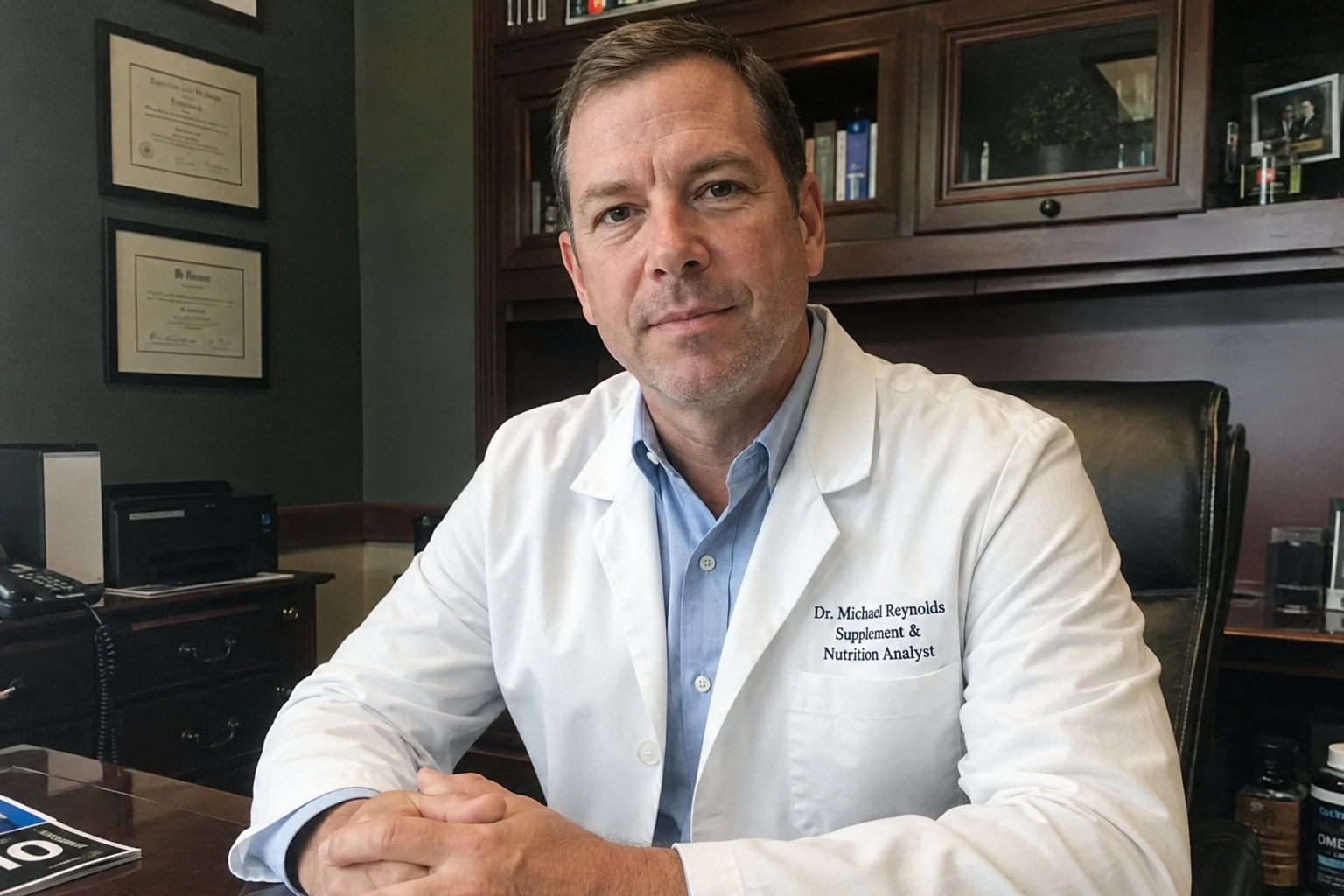
Dr. Michael Reynolds
Supplement & Nutrition Analyst · Updated June 2026
For nearly two decades, Michael Reynolds has worked at the intersection of nutrition, dietary supplements, and consumer health education. Based in Denver, Colorado, he has spent much of his career analyzing supplement formulations, reviewing emerging research, and helping people better understand how nutrition impacts long-term wellness. His work emphasizes practical, science-backed approaches to healthy aging, cardiovascular health, and daily vitality.